
Operational site review
The visit combines pavement observations with a discussion of parking, entrances, deliveries, and routine vehicle movement. That context helps us recommend an approach that fits the property.
Serving Dallas, Texas & surrounding areas
Irving phased pavement service
Give occupied pavement a plan that respects timing, access, and the condition underfoot. Irving property owners coordinate phased sealcoating, crack work, repairs, and striping around everyday use.
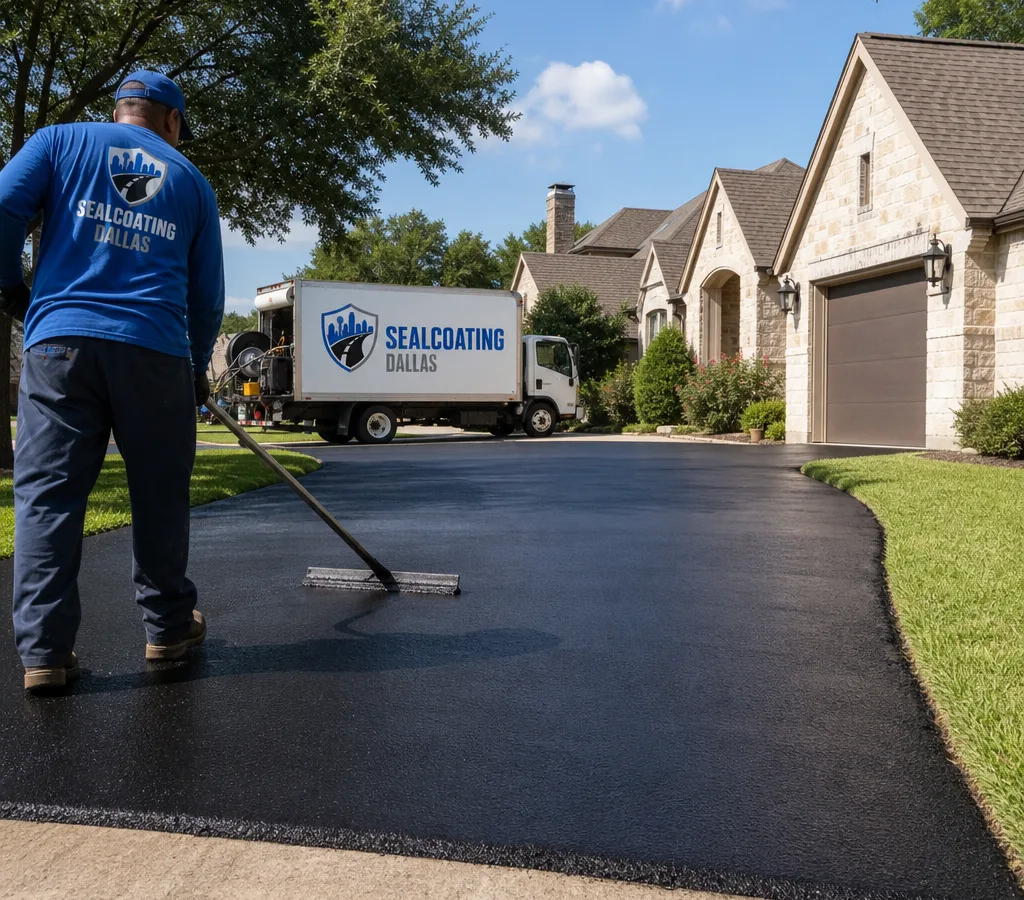
Pavement timing strategy
Pavement service at an occupied property calls for deliberate timing. Parking, deliveries, staff, residents, and visitors can all affect which areas are treated first and when a completed section can return to use.
Irving asphalt projects range from residential driveways to commercial lots. We assess the pavement, discuss its traffic pattern, and recommend the crack preparation, repair, sealcoating, or striping work that makes sense for the surface.
Sealcoating Dallas travels to Irving from 1100 S Akard St, Suite 4, Dallas, TX 75215. Call (469) 498-2260 to arrange an inspection for a driveway, active parking area, drive lane, or other asphalt project.
Timing matters after the coating
Fresh sealcoat needs time to cure without tire marks, early traffic, or sudden weather problems. Breaking a suitable property into planned areas gives the surface the conditions it needs while keeping the work understandable.
The best section order comes from the site, not a fixed script. An entrance, a drive lane, a parking row, or a driveway may need different timing depending on access needs and pavement preparation.
During the inspection, we pair that operational conversation with a close look at cracks, oxidation, raveling, and edges. The result is a maintenance scope that considers both performance and property activity.
Applied to sound pavement, sealcoat helps slow oxidation and water exposure, but it cannot repair a failed base or correct drainage. Sections with those concerns are identified during inspection before a treatment plan is finalized.
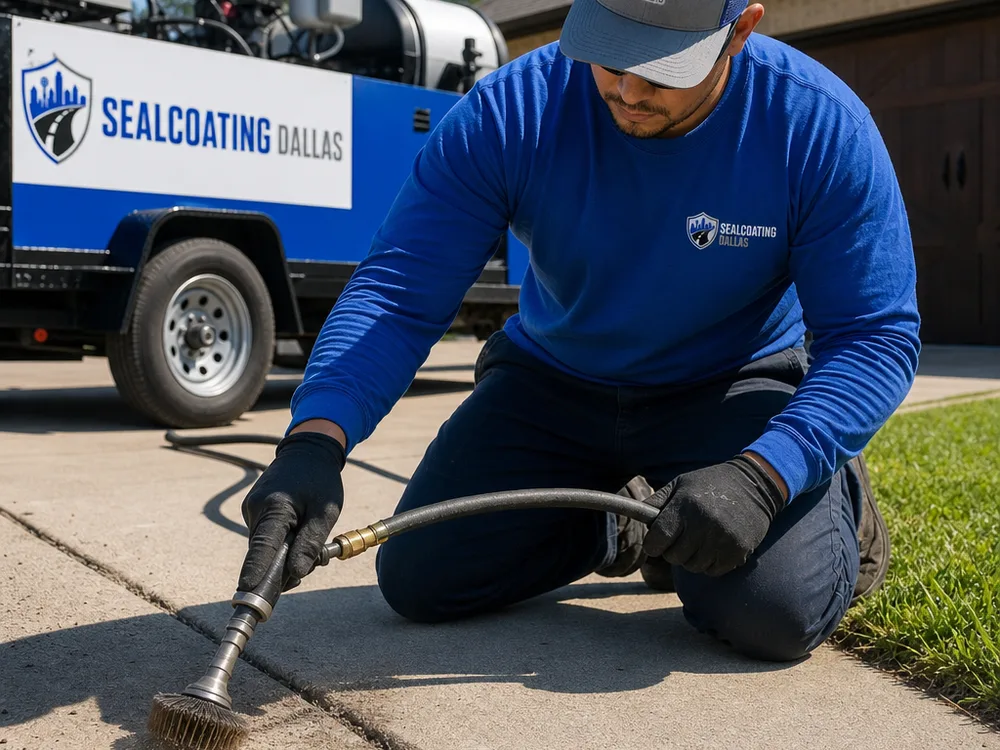
Workable sections, clear expectations
Some properties need a plan for using part of the pavement while another area is being prepared or cured. We explore those needs during the site review before scheduling work.
The visit combines pavement observations with a discussion of parking, entrances, deliveries, and routine vehicle movement. That context helps us recommend an approach that fits the property.
Areas with different use patterns or surface conditions can be identified before work begins. This helps organize the recommended service around the pavement that needs attention first.
North Texas rain, humidity, shade, and heat all affect application and curing. We plan around suitable conditions rather than treating the calendar as more important than the finish.
Each approved area receives the cleaning, crack work, edge detail, and repair attention called for in the scope before protective coating is applied.
Cure guidance is provided for the conditions on the work day. That information helps property contacts manage the return of vehicles and foot traffic to completed sections.
Areas that need asphalt repair are identified before coating is scheduled. Separating that work from surface protection gives the property a clearer path for maintaining each section.
Costs and workable staging
Parking-area estimates can run $1,200 to $5,000+ depending on size and access, while smaller driveways commonly run $250 to $600 before preparation needs are reviewed. Across residential and light-commercial surfaces, sealcoating commonly falls at $0.20 to $0.50 per square foot.
Site access is only one factor. Measurements, surface condition, cleaning needs, crack prep, edging detail, and how many coats are appropriate also affect the scope. Following an on-site inspection, we confirm the exact cost so the scope matches the pavement you have.
Planned in usable stages
The on-site review sets the treatment areas and identifies the preparation they need. Application follows the approved plan, then each completed surface receives return guidance.
We review cracks, wear, edges, and drainage clues while learning how vehicles, visitors, deliveries, or residents use the property.
The proposed work identifies sections that fit the asphalt condition and access needs, giving the project a practical framework before scheduling.
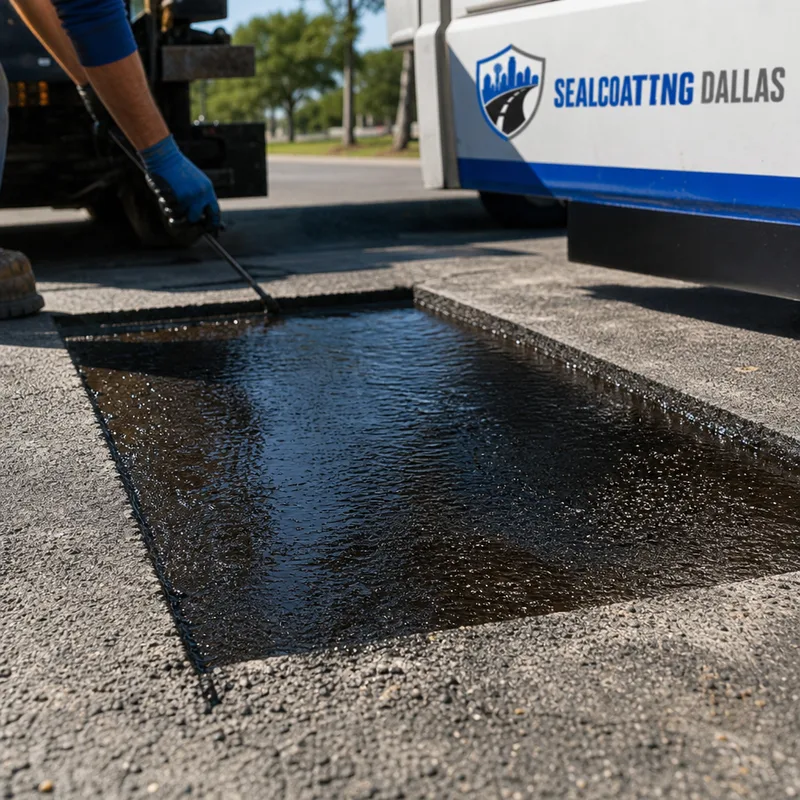
Cleaning, crack treatment, repair coordination, and edge work are handled according to the recommended scope so each selected area is ready for coating.
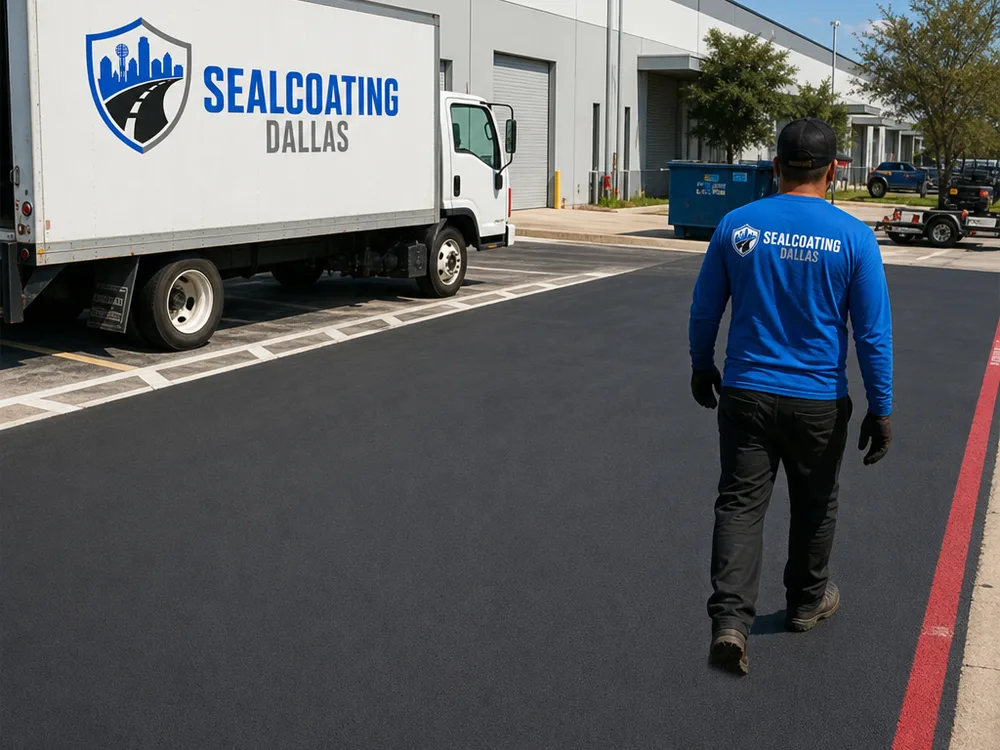
Protective coating is placed across the approved sections with careful coverage and boundaries, following the site plan established during inspection.
We explain when completed areas can return to use based on current temperature, humidity, shade, and the service performed that day.
Preparation in practice
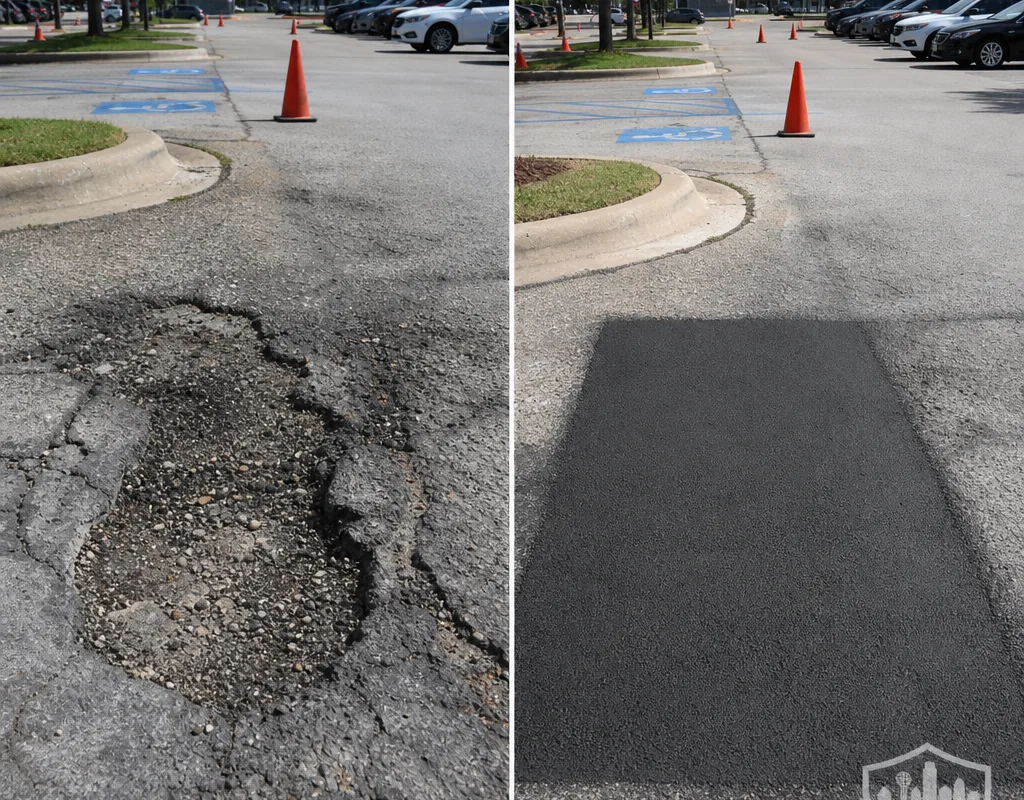
The photo set shows surface preparation, applied coating, and protected work areas. It provides a useful visual for the care and timing involved in a planned asphalt project.
Questions about phasing and cure time
Occupied properties often need practical information before pavement work is scheduled. These responses cover sections, weather, access, preparation, and the timing for returning vehicles.
Phasing can be helpful when a property needs some areas to remain usable. The site layout, pavement condition, access priorities, and cure requirements all inform whether sections make sense for the project.
Our team discusses the property activity and inspect the surface before recommending an order. Entrances, traffic patterns, preparation needs, and the work scope provide the information needed to plan a practical sequence.
Weather conditions affect coating application and cure time. If rain, humidity, or other conditions create a poor window, we discuss the impact on scheduling instead of proceeding in a way that risks the finish.
A driveway can be reviewed with other paved areas or as its own project. We consider garage access, edges, the surface condition, and practical vehicle use when discussing its service timing.
The inspection looks for cracks, raveling, loose material, edge wear, previous repairs, oil-affected areas, and drainage clues. Those findings identify the preparation or repair considerations before coating.
Return timing depends on the work completed and conditions that day, including temperature, humidity, and shade. We provide guidance after service so vehicles do not disrupt fresh coating before it has cured.
Schedule with the site in mind
Explain how the property needs to stay usable, then let us review the asphalt in person. We will identify preparation needs and recommend a phased plan for sealcoating, crack treatment, repairs, or striping from our Dallas base.
Request a quote
Send the size, surface condition, and access details. We reply with next steps and schedule an on-site look before any written scope.