
Full footprint measurement
The inspection follows the entire asphalt area, including approaches, turns, parking sections, and connecting runs, so the proposed service reflects the actual surface rather than an estimate from one visible section.
Serving Dallas, Texas & surrounding areas
Fort Worth pavement maintenance
Protect every part of a long asphalt surface, from its entrance to the farthest turn. Fort Worth driveways and parking areas receive a plan for crack work, sealcoating, edge detail, and a proper cure.
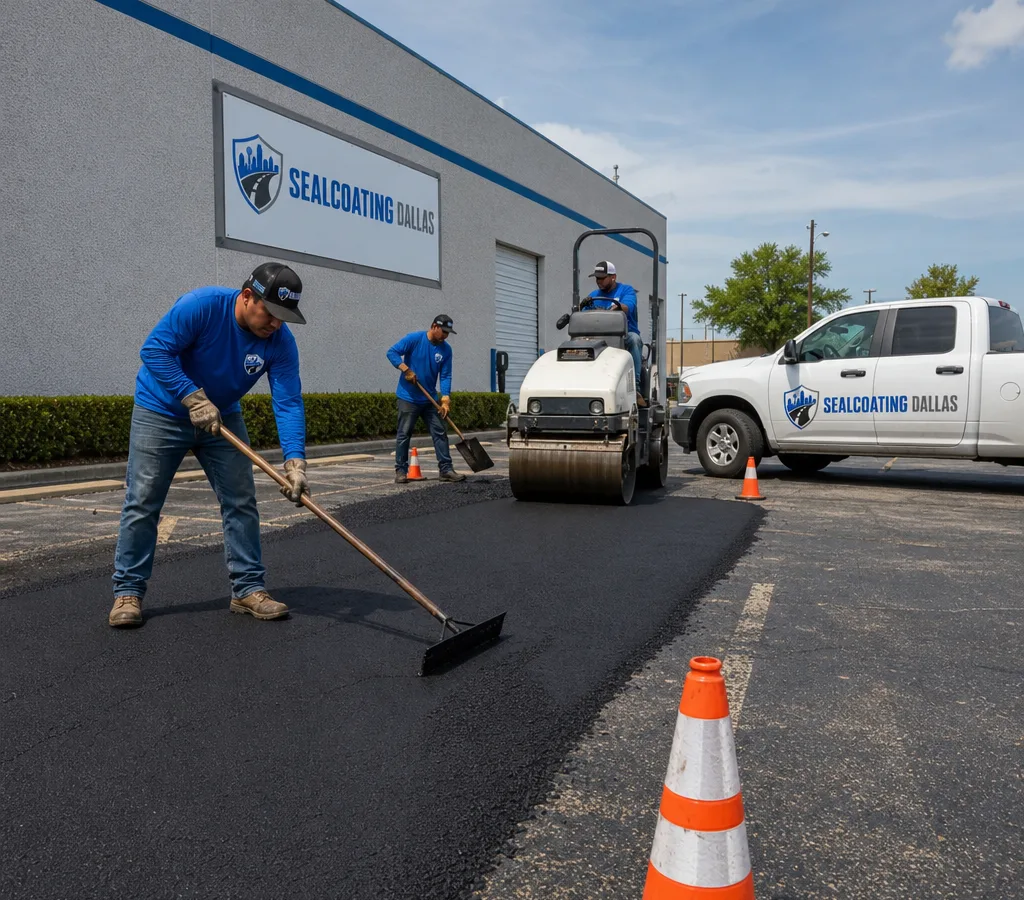
Full-surface maintenance
Long driveways, broad turnarounds, and connected parking areas can wear unevenly. Sun exposure, turning pressure, and water at an edge may affect one section more than another, so a useful sealcoating plan begins with the entire paved layout.
Fort Worth projects can include residential asphalt and commercial pavement in the same conversation. We inspect cracks, raveling, transitions, and high-use areas, then explain whether surface preparation, crack sealing, repairs, striping, or coating fits the condition.
Sealcoating Dallas serves Fort Worth from 1100 S Akard St, Suite 4, Dallas, TX 75215. Use (469) 498-2260 to request an on-site inspection for a driveway, turnaround, parking area, or connected asphalt surface.
Distance changes the inspection
At the far end of an extended driveway, water may collect or edge wear may be more advanced than it is at the entrance. Looking across the whole surface prevents a maintenance decision from being based on only the best-looking area.
Measured scope also helps separate routine protection from conditions that need attention first. A sound section may be ready for sealcoat, while another section benefits from crack work, cleaning, or repair before the protective layer is applied.
For commercial pavement, the same careful review accounts for drive lanes, turning sections, and parking rows. The goal is a plan that matches how the asphalt is shaped and used, not a generic coating proposal.
Sealcoat helps slow UV oxidation and surface wear on prepared, sound asphalt, but it does not correct low spots or a failed base. When a section needs repair first, we explain that condition before setting a coating scope.
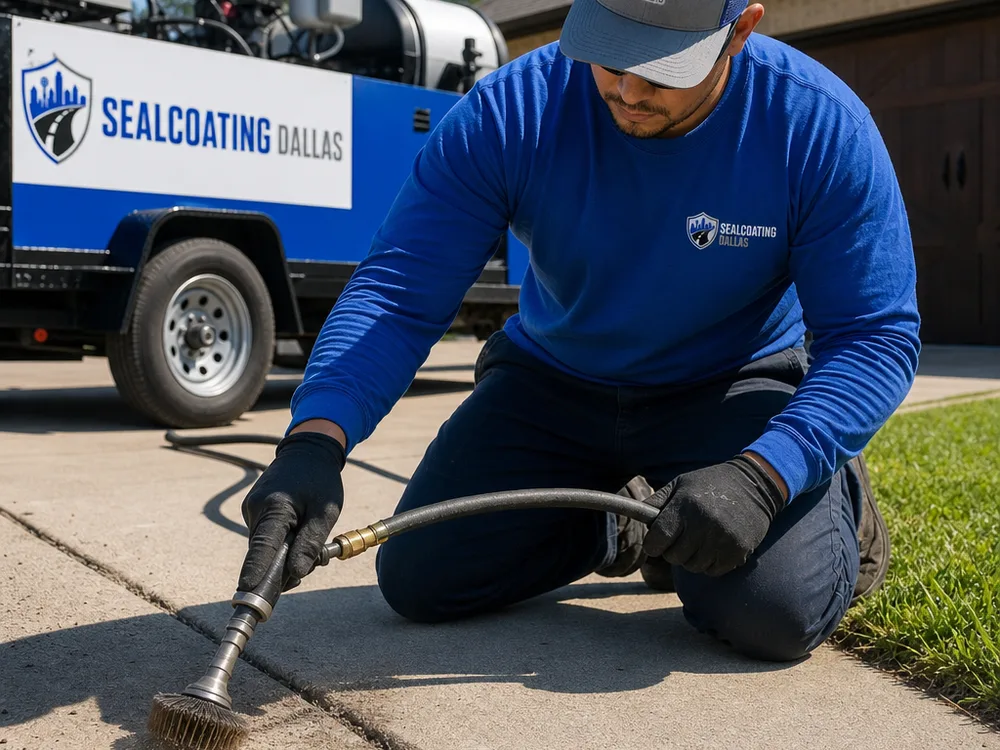
Pavement beyond the first view
A larger paved layout needs more than a glance from the curb. We review the areas that turn, drain, meet concrete, and carry daily traffic before defining the maintenance work.
The inspection follows the entire asphalt area, including approaches, turns, parking sections, and connecting runs, so the proposed service reflects the actual surface rather than an estimate from one visible section.
Steering and braking can wear turnarounds and entrances differently from straight pavement. Those areas are checked for surface loss, cracking, and prep needs before a coating plan is set.
Open cracks are reviewed for their location, pattern, and condition. Appropriate crack treatment can be included before coating to reduce the paths where water reaches the pavement base.
Edges beside lawns, sidewalks, curbs, and concrete transitions receive attention during scope planning. Clear boundaries support tidy application and help define the asphalt that will be protected.
Temperature, humidity, shade, and the day's weather affect when treated asphalt can return to use. We discuss practical re-entry guidance for the surface and its traffic pattern.
Parking rows, drive lanes, and turning areas can wear differently across a commercial surface. Their traffic pattern is considered when we inspect the asphalt and discuss the protective work.
Pricing for the real footprint
A measured asphalt footprint sets the starting range: most residential and light-commercial surfaces run $0.20 to $0.50 per square foot. Smaller driveways commonly run $250 to $600, while larger parking areas can run $1,200 to $5,000+ depending on size and access.
Long runs, turning areas, total square footage, surface condition, cleaning needs, crack prep, edging detail, and how many coats are appropriate shape the scope. After an on-site inspection, the exact cost is confirmed so the scope matches the pavement you have.
From assessment to re-entry
Each project moves from observation to preparation, application, and return guidance. The sequence is adjusted around the condition and layout found during the on-site visit.
We inspect the full footprint, noting cracks, worn edges, transitions, drainage clues, access points, and portions with different traffic patterns.
The inspection findings are translated into a clear recommendation for cleaning, crack work, repairs, coating, striping, or a combination of pavement services.
Debris, loose material, vegetation at edges, and suitable cracks are addressed according to the agreed scope so the coating has a clean surface for bonding.
Sealcoat is placed across the approved areas with attention to overlap, perimeter lines, and the sections that receive heavier turning or vehicle pressure.
After the work, we provide use guidance based on weather conditions, shade, and the completed service so vehicles return at an appropriate time.
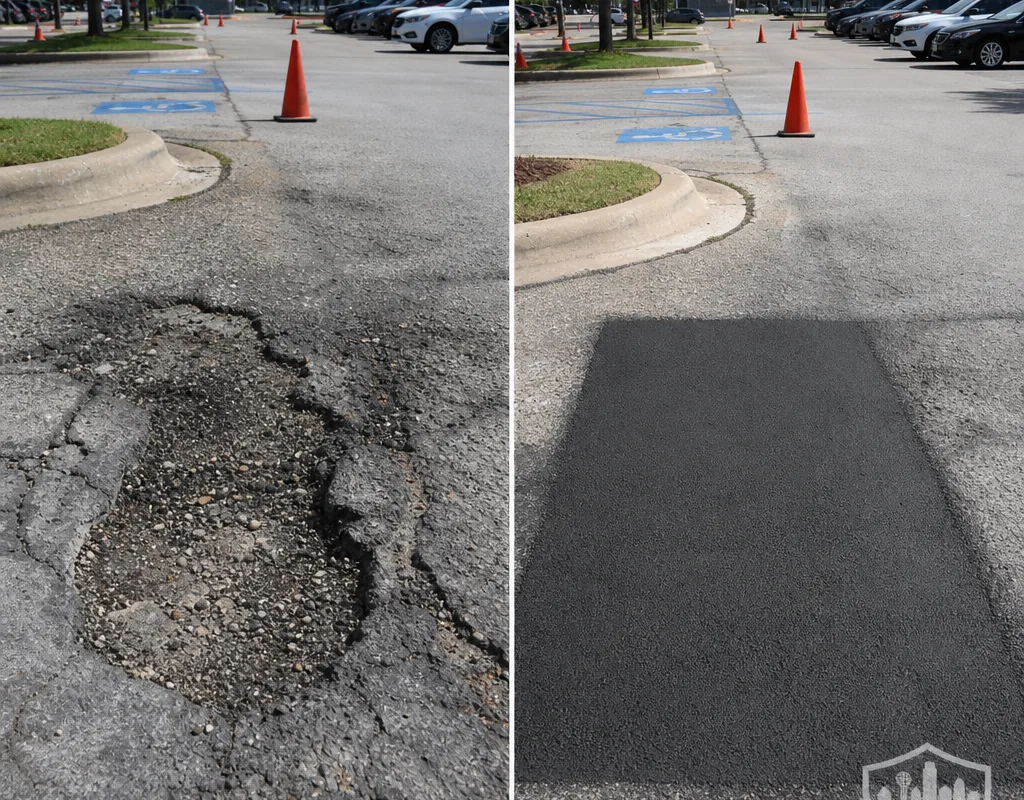
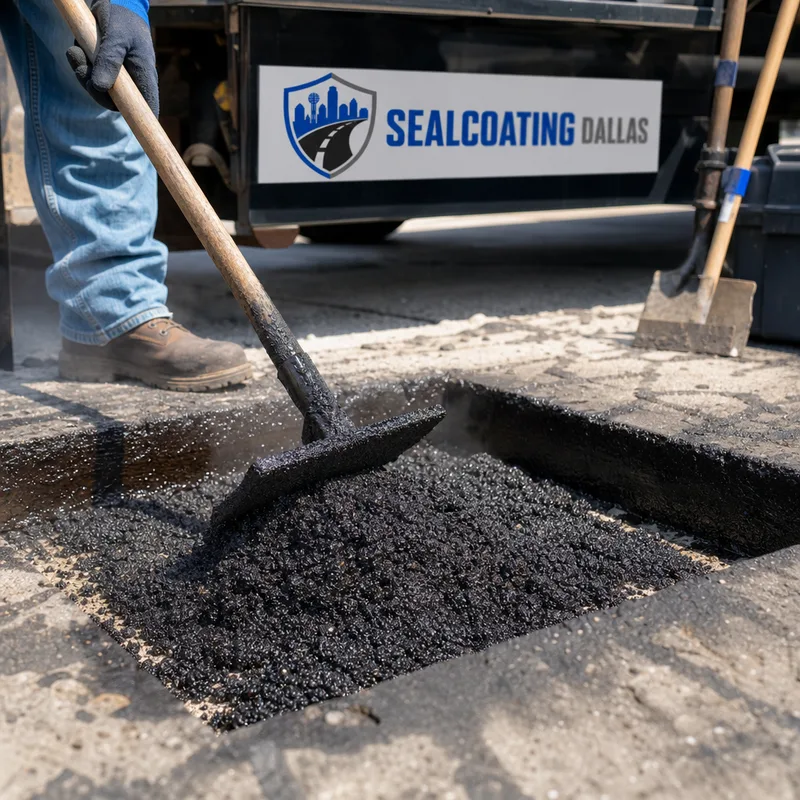
Fieldwork in focus
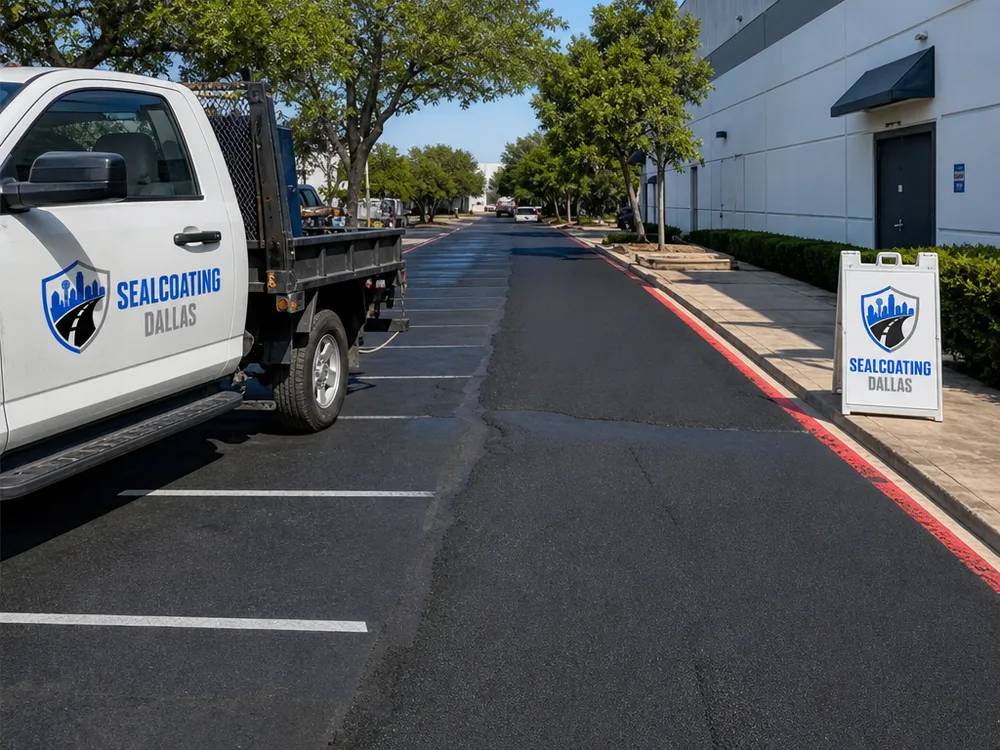
This photo group illustrates asphalt preparation, careful application at pavement boundaries, and finished surfaces. It can help frame the details discussed during an inspection.
Questions about larger paved areas
Long driveways and connected parking surfaces create practical questions about measurement, crack preparation, use timing, and edges. These answers explain how an inspection informs the work.
We measure the paved footprint on site, including curves, turnarounds, branches, and connected areas. That measurement gives the estimate a sound basis and lets us identify parts of the driveway with different wear or preparation needs.
Edges beside grass, sidewalks, and concrete often collect debris or lose support more quickly than the center of the pavement. Cleaning and defining those areas supports an orderly application and helps identify damage that needs repair first.
A turnaround can be reviewed as part of the same property visit. We look at its condition, turning wear, and connection to the driveway, then recommend a scope that reflects the needs of each paved section.
Different sections can require different preparation. The inspection separates sound pavement that may be ready for protection from areas where crack treatment, cleaning, or asphalt repair should lead the work.
Yes. Temperature, humidity, shade, and recent moisture all affect curing. We provide return-to-service guidance for the conditions on the work day so tires do not mark or disturb the fresh coating.
Yes. A visit can cover driveways, parking areas, and connected asphalt surfaces. Reviewing them together helps clarify the condition, access needs, and services that make sense for each area.
Measure before you maintain
Bring us the full paved layout, not just the most visible section. Our team can inspect the driveway or parking area, explain its preparation needs, and build a plan for sealcoating, crack work, repairs, or striping from Dallas.
Request a quote
Send the size, surface condition, and access details. We reply with next steps and schedule an on-site look before any written scope.