
Condition-led surface inspection
We review cracking, raveling, loose aggregate, patch transitions, edges, and drainage clues before recommending a protective coating. The findings guide what belongs in the project.
Serving Dallas, Texas & surrounding areas
Garland crack-aware sealcoating
Address cracks and worn areas before surface maintenance turns into a larger pavement problem. Garland asphalt receives a review before sealcoating, repairs, or crack work begin.
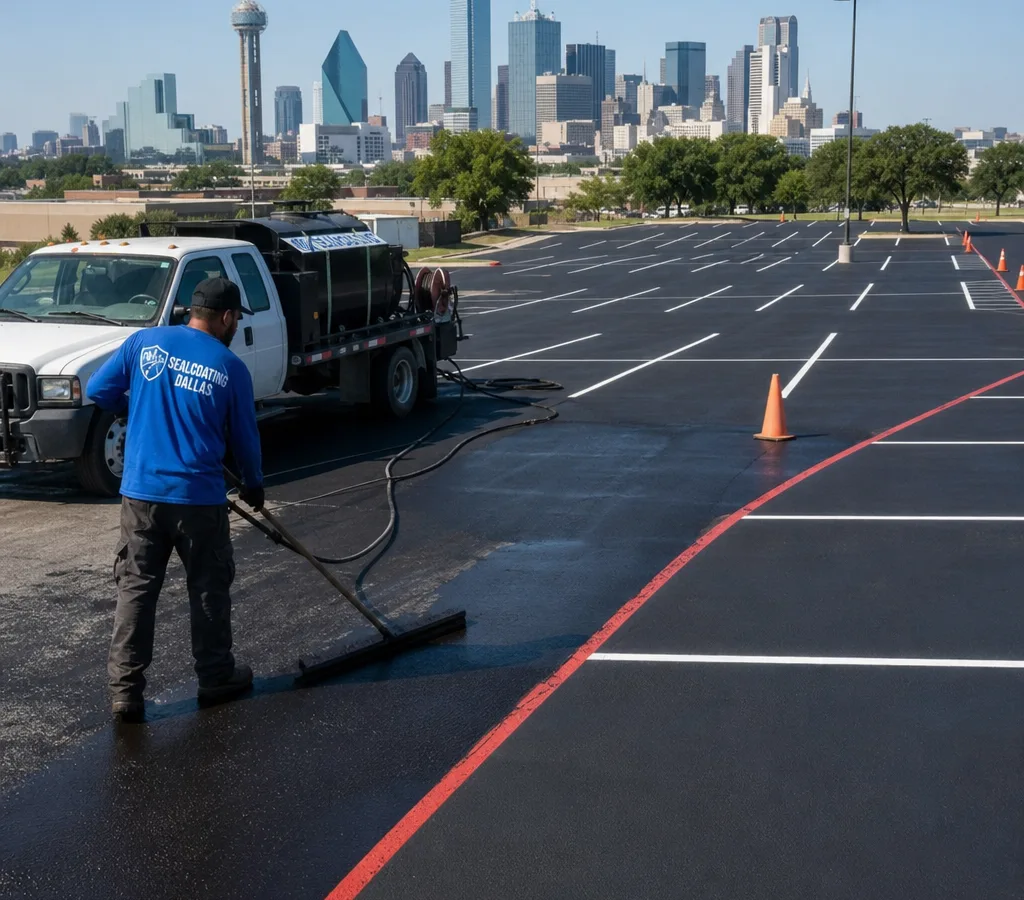
Condition before coating
Fading asphalt can be ready for maintenance, but open cracks, loose aggregate, and broken edges deserve a closer look first. Water entering those openings can undermine the base and turn a surface issue into a more expensive repair need.
Garland properties may have older residential pavement, commercial parking areas, or both. We inspect the condition before recommending sealcoat, identifying the crack treatment, cleaning, patch work, or striping that supports the best next step.
Garland service is provided from 1100 S Akard St, Suite 4, Dallas, TX 75215 by Sealcoating Dallas. Call (469) 498-2260 for an on-site inspection of your driveway, parking area, or other asphalt surface.
Water finds the opening
An open crack is more than a line on the surface. Rain can enter it, wet the material below, and contribute to movement or deterioration as the pavement cycles through changing conditions.
Older asphalt may also show raveling, where aggregate begins to loosen from a dry, oxidized surface. Cleaning, crack preparation, and a condition-based recommendation help determine whether protective coating can serve the pavement well.
When cracking points to deeper failure, that information belongs in the conversation before a new coating is applied. A clear inspection helps property owners understand what can be maintained and what needs repair planning.
Protective coating helps defend prepared asphalt from sun and moisture, but it cannot restore a failing base or correct a low area that holds water. Those conditions are identified so repair options can lead the maintenance plan.
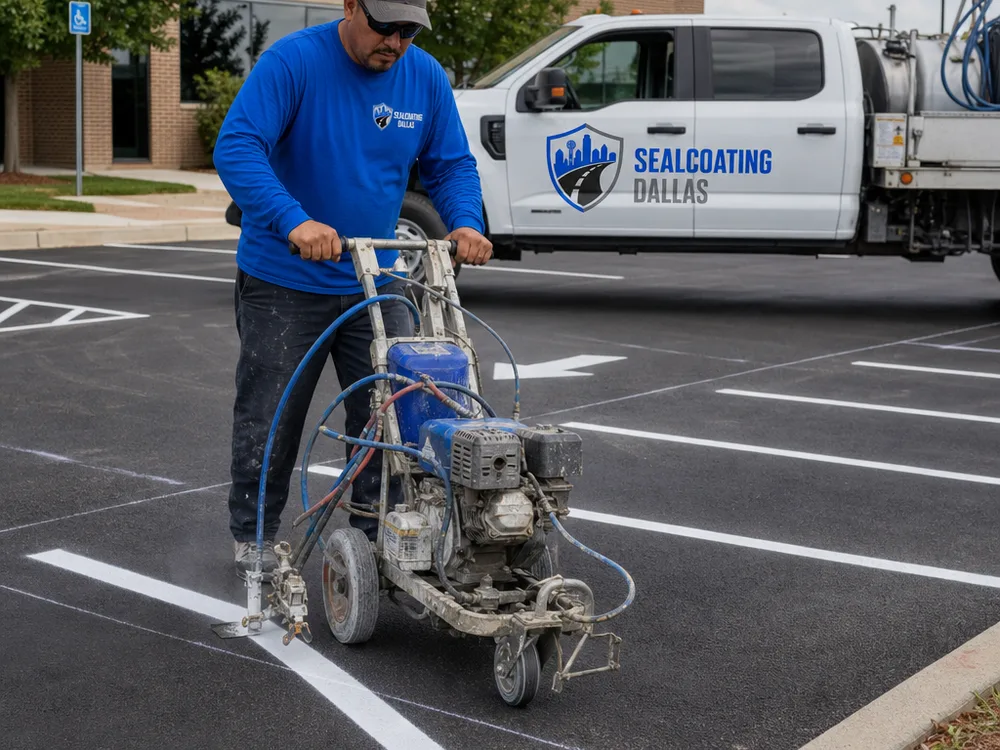
Protection starts with condition
Sealcoating is most useful when the asphalt receives preparation suited to its condition. The inspection identifies water paths, worn areas, and repairs that should shape the scope.
We review cracking, raveling, loose aggregate, patch transitions, edges, and drainage clues before recommending a protective coating. The findings guide what belongs in the project.
Open cracks can let water travel into the pavement structure. Appropriate crack preparation is considered before coating to help reduce those paths and protect sound surrounding asphalt.
Surface protection and asphalt repair have different roles. We identify areas where a repair conversation should come before sealcoating so the scope is clear and realistic.
Debris, oil-affected spots, vegetation, and loose material can interfere with coating adhesion. Preparation addresses the conditions that would keep a sealcoat from bonding evenly.
Once the approved prep is complete, sealcoat is applied with attention to coverage and edges. The result is intended to protect maintained asphalt from further sun and weather exposure.
Driveway edges near grass, sidewalks, and garage aprons are inspected for loose material, cracks, and support loss. Those details help determine the preparation needed before maintenance.
Condition shapes the estimate
Sealcoating on residential and light-commercial surfaces is priced at $0.20 to $0.50 per square foot. A smaller driveway commonly runs $250 to $600 before preparation is evaluated. For larger parking areas, published pricing can run $1,200 to $5,000+ depending on size and access.
Before setting an exact figure, we consider surface condition, crack prep, cleaning needs, total square footage, edging detail, how many coats are appropriate, and access. Your exact cost is confirmed after an on-site inspection so the scope matches the pavement you have.
Inspect, prepare, protect
The process begins by reading the surface for more than color loss. Preparation and repair recommendations are made before coating, followed by clear guidance for the treated pavement.
We inspect cracks, surface loss, edges, previous patches, and areas affected by water so the maintenance discussion begins with the asphalt as it exists.
The review distinguishes suitable sealing preparation from conditions that need asphalt repair, giving the property a clear view of the proposed scope.
Cleaning, crack treatment, loose-material removal, and edge work are performed as appropriate for the approved service before protective coating begins.
The coating is applied across the selected sound asphalt with even coverage and close attention to transitions, perimeter areas, and preparation work.
We explain the return conditions based on the completed work, temperature, humidity, and shade so the fresh surface has time to cure properly.
Preparation tells the story
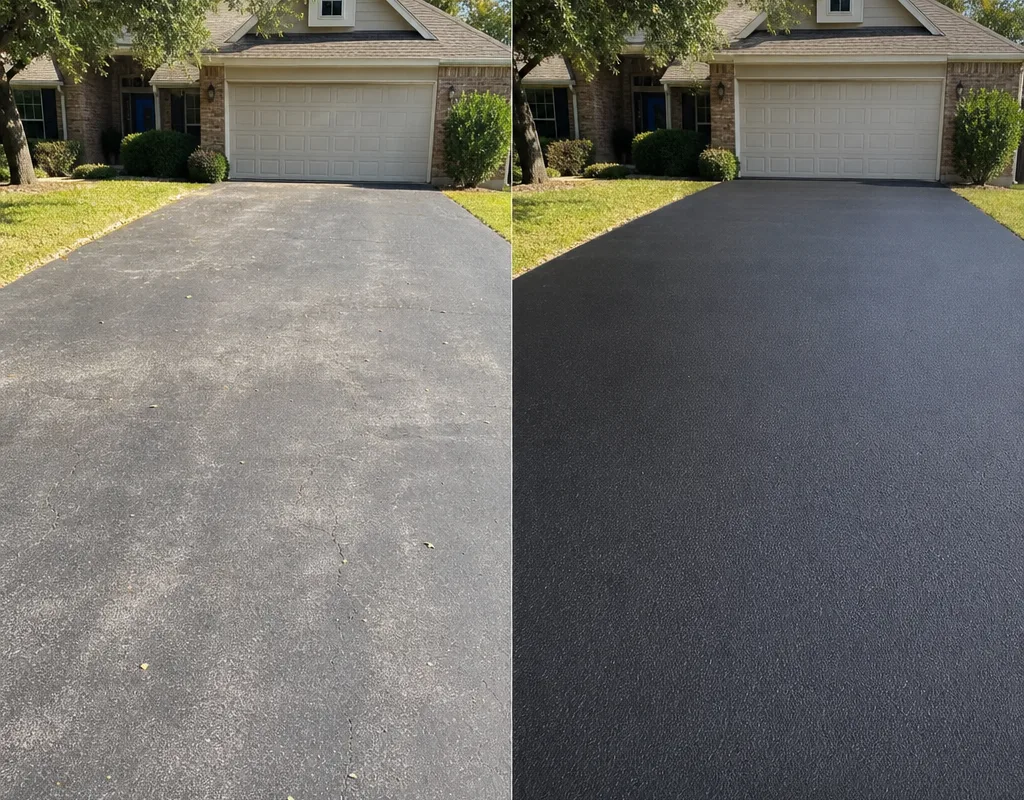
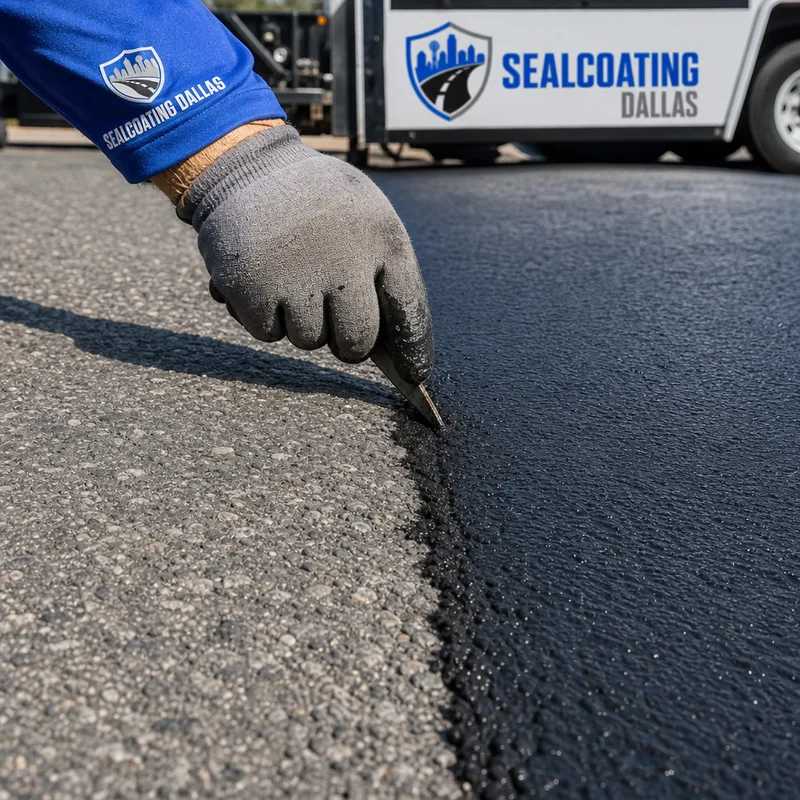
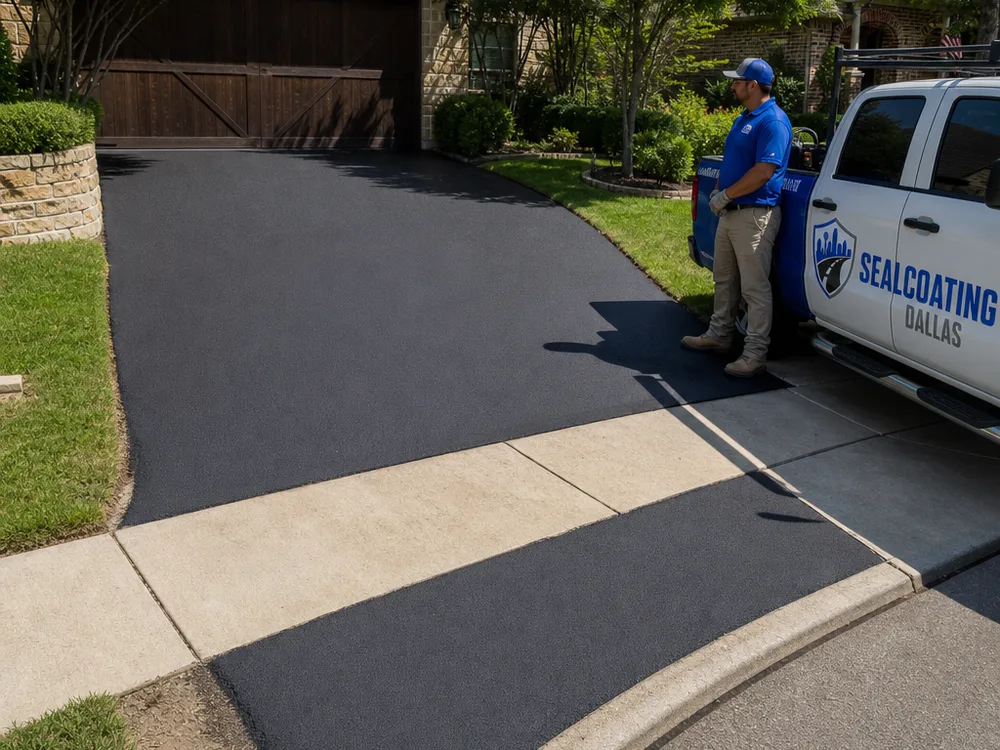
These images show clean asphalt surfaces, preparation near damaged areas, and protective coating application. They illustrate the field details considered before older pavement receives maintenance.
Questions about worn asphalt
Older or faded pavement often raises questions about cracks, repairs, water, and the role of sealcoating. These answers explain why condition should lead the conversation.
Sealcoat protects the asphalt surface, while appropriate crack treatment helps address openings before coating. Wide, moving, or failing cracks may need a different repair discussion because water and pavement movement can continue below the surface.
Raveling happens when the asphalt surface loses aggregate and begins to look rough, thin, or dry. It can result from age, sun exposure, water, and traffic, so the inspection determines whether maintenance preparation is appropriate.
Yes. Patch edges, settlement, cracking, and the condition of surrounding asphalt give useful information about the surface. The review identifies whether the patch can be included in maintenance or needs repair attention first.
Wet and dry cycles can move expansive clay soil beneath pavement, adding stress at cracks, joints, and edges. An inspection looks for the visible effects so the scope reflects the condition rather than only the surface color.
Yes. We can inspect residential and commercial asphalt at the property, review the condition of each surface, and explain which preparation, repair, sealing, or striping services fit their individual needs.
Coating bonds best to clean asphalt. Dirt, loose material, vegetation, and oil-affected spots can require preparation before sealing, so those conditions are considered when the on-site scope is developed.
Let the condition lead
Show us the cracks, worn edges, and faded areas before choosing a coating. A field inspection will clarify preparation or repair needs and recommend sealcoating, crack work, striping, or asphalt repair from Dallas.
Request a quote
Send the size, surface condition, and access details. We reply with next steps and schedule an on-site look before any written scope.