
Site circulation review
Entrances, drive lanes, parking sections, and turning areas are noted with the pavement condition. This gives the recommended work a practical connection to how the property is used.
Serving Dallas, Texas & surrounding areas
Arlington access-aware sealcoating
Keep pavement maintenance organized around the people who use the property. Arlington driveways, office lots, and retail parking areas get a clear plan for access, prep, coating, and cure time.
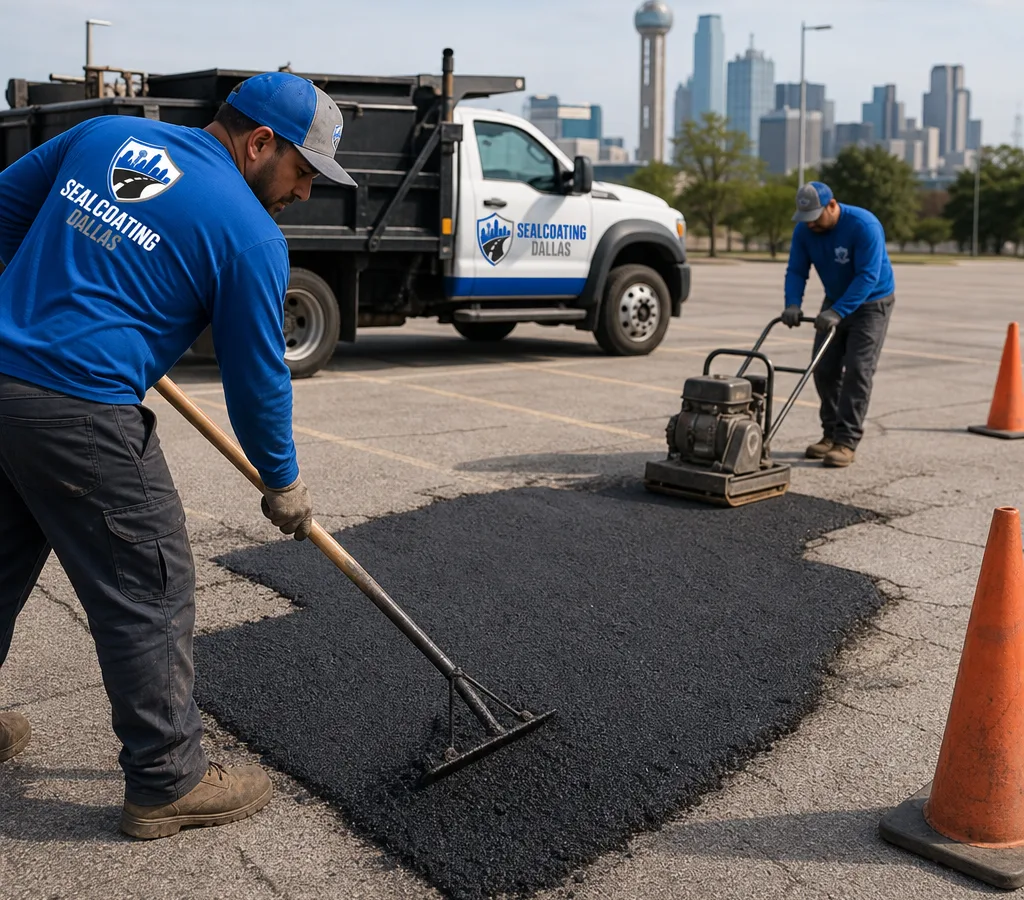
Active property planning
Busy parking areas and residential driveways need a plan that considers more than the coating itself. Entrances, parked vehicles, delivery activity, and the time required for cure all influence how sealcoating should be organized.
Arlington property owners can use one inspection to discuss commercial and residential asphalt needs. We assess the surface, identify prep or crack work, and establish a workable approach for sealcoating, repairs, and striping where appropriate.
From 1100 S Akard St, Suite 4, Dallas, TX 75215, Sealcoating Dallas serves Arlington. Reach (469) 498-2260 for an on-site review for a driveway, office property, retail parking area, or other asphalt surface.
A usable property during maintenance
Before equipment arrives, it helps to know which entrance matters most, where vehicles normally queue, and what areas need advance notice. Those details turn a surface treatment into a better organized property project.
Phased work is especially useful when a lot or drive aisle cannot simply be ignored for the day. We can discuss sections, treatment order, and cure considerations alongside the asphalt condition and selected services.
Residential surfaces benefit from the same attention to daily routines. Vehicles, garage access, sidewalks, lawn edges, and delivery activity all provide useful context when we prepare a sealing plan.
Protective coating improves surface defense on sound asphalt, yet it does not fix a failing base, deep depressions, or drainage problems. The inspection identifies those conditions so repair options can be considered before sealing.
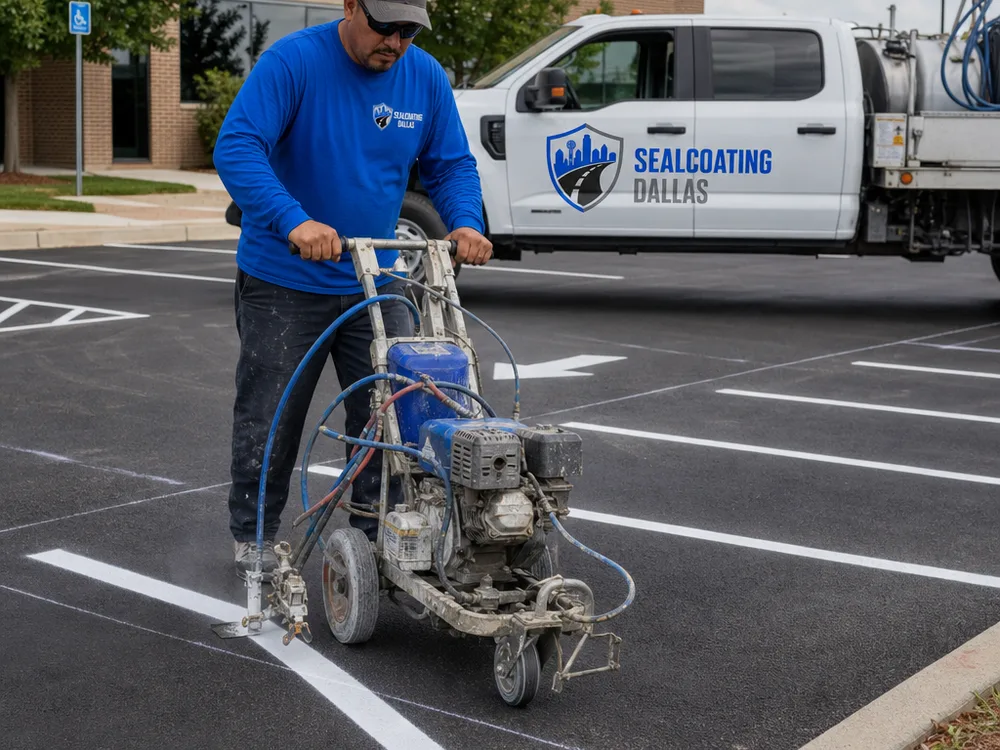
Access belongs in the scope
Pavement maintenance is easier to manage when surface condition and daily movement are considered together. We use the visit to understand access needs before recommending the work.
Entrances, drive lanes, parking sections, and turning areas are noted with the pavement condition. This gives the recommended work a practical connection to how the property is used.
Where access must remain available, the project can be discussed in usable areas rather than as a single closure. The approach depends on the layout and services selected after inspection.
Dirt, loose aggregate, vegetation, oil-affected areas, and suitable cracks are evaluated before coating. Preparation supports stronger bonding and makes the proposed work easier to understand.
Edges at entrances, curbs, sidewalks, and adjoining surfaces are considered during application planning. Attention to those boundaries helps maintain clear movement through the property.
We explain the cure conditions and reopening guidance for the work day. Property contacts can use that information when coordinating vehicles, visitors, residents, or staff.
Residential work is organized around garage access, sidewalks, lawn edges, deliveries, and the vehicles that use the driveway. Those details help shape practical preparation and cure guidance.
A price shaped by use
For a starting reference, most residential and light-commercial surfaces fall between $0.20 to $0.50 per square foot. Smaller driveways often range from $250 to $600 before condition and prep are assessed. Parking areas at the larger end can range from $1,200 to $5,000+ depending on size and access.
Access planning, total square footage, surface condition, cleaning needs, crack prep, edging detail, and how many coats are appropriate determine the proposal. An on-site inspection confirms the exact cost so the scope matches the pavement you have.
A sequence built for use
The project begins with an on-site look at asphalt and movement through the property. Preparation and application follow the service plan, with guidance for reopening the treated areas.
We inspect the pavement while identifying entrances, common vehicle paths, parking areas, and details that may affect how the work is arranged.
Property contacts share the areas that need special consideration, helping shape an approach to sections, notifications, and available routes during service.
Cleaning, edge work, crack treatment, and any recommended repairs are completed before coating so the selected surface work starts from appropriate conditions.
Sealcoating and related pavement services are performed in the agreed areas with clear attention to boundaries, coverage, and the traffic plan.
We review cure-time guidance based on temperature, humidity, shade, and the completed work so the property knows when treated areas can resume use.
Worksite details
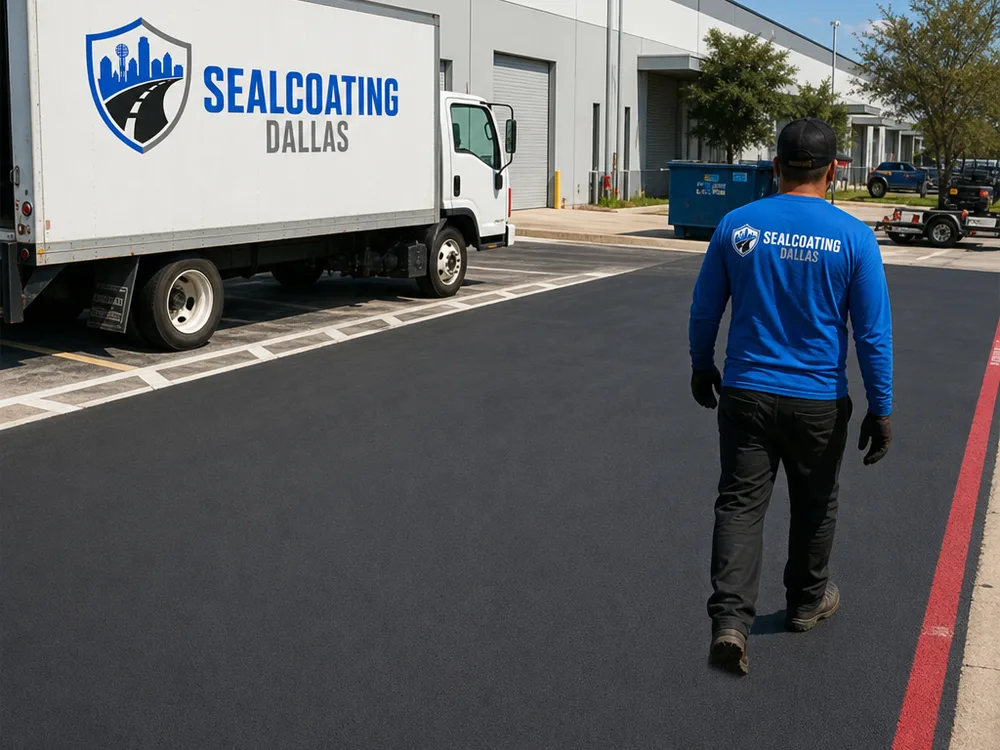
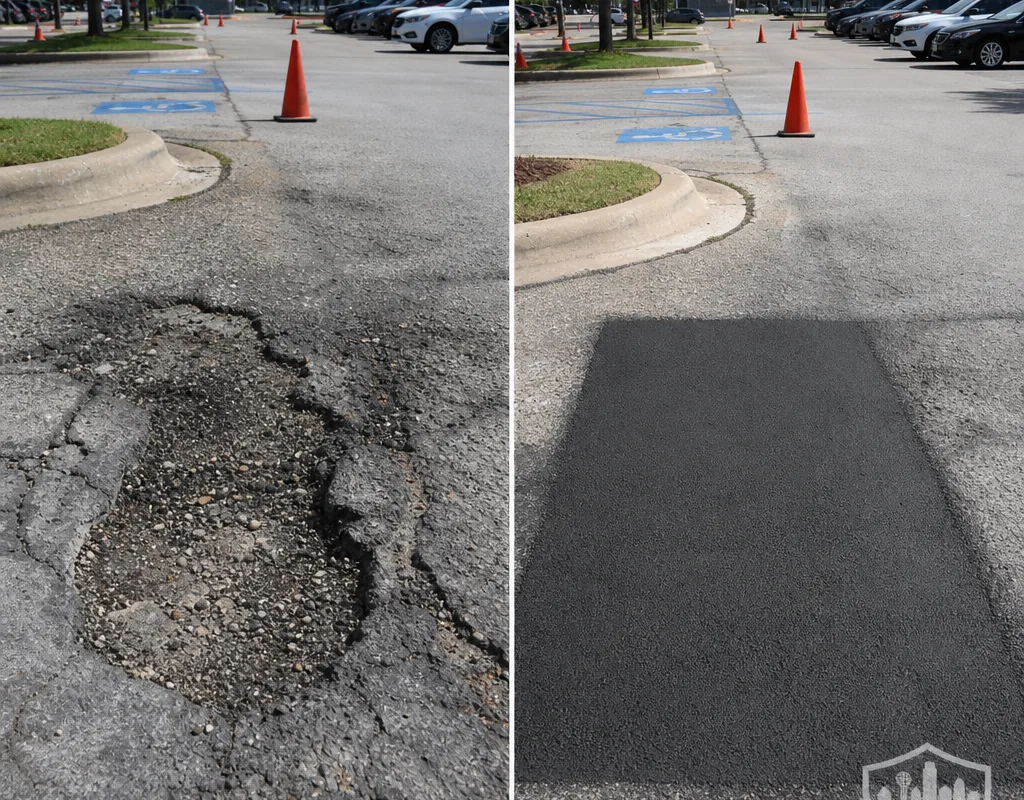
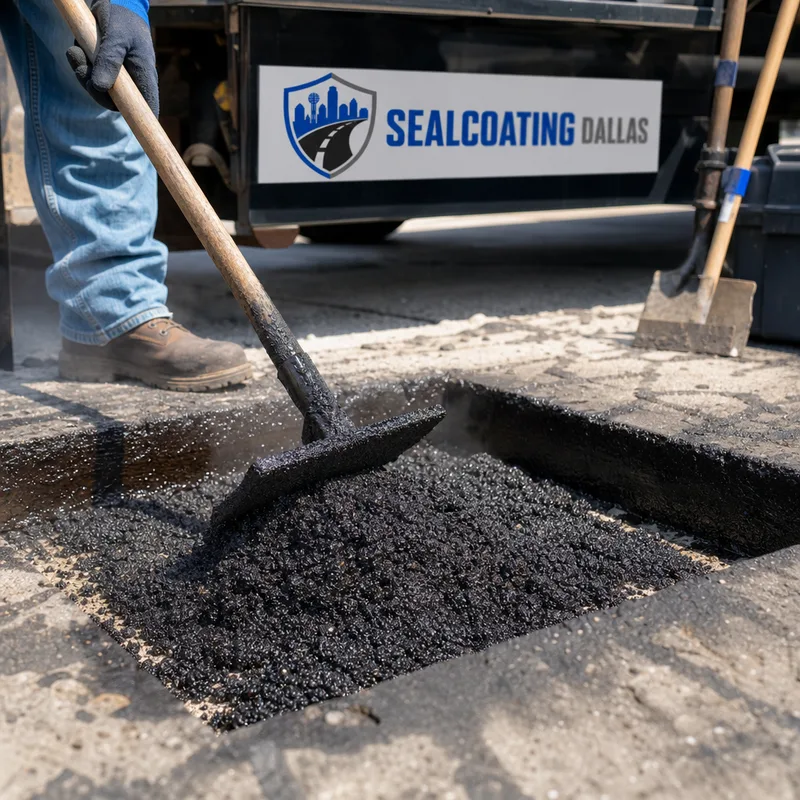
Clean application boundaries, prepared cracks, and treated asphalt appear throughout this image set. The examples offer visual reference for the care that supports a clear handoff on active properties.
Planning and access questions
Property managers and residents often want to know how pavement work affects entrances, vehicles, scheduling, and the surface itself. These answers address common planning concerns.
A sectioned approach can be discussed when access needs make it useful. The inspection considers the lot layout, traffic patterns, pavement condition, and curing requirements before a work plan is recommended.
Tell us about entrances, parking patterns, delivery timing, tenant needs, and any areas that must remain accessible. That information helps us understand the property use while we evaluate the asphalt.
Vehicles need to be moved from the areas scheduled for treatment. We discuss the property plan before work begins and provide return guidance after application based on the conditions affecting cure time.
Appropriate crack treatment is reviewed as part of surface preparation. Addressing open cracks helps reduce water entry, while larger or failing areas may need repair considerations before surface protection.
Yes. A residential project benefits from clear preparation and re-entry guidance, especially around garage access, sidewalks, lawn edges, and the vehicles that use the driveway every day.
Sealcoat needs suitable conditions to set and cure. Rain, humidity, shade, and temperature can change that timing, so the schedule is planned around weather conditions rather than forced through a poor window.
Keep access in view
Tell us how the property is used and what the asphalt is showing. An inspection will identify needed preparation and outline a sensible approach to sealcoating, repair, crack work, or striping from Dallas.
Request a quote
Send the size, surface condition, and access details. We reply with next steps and schedule an on-site look before any written scope.